
The Theory of Everything
The Theory of Everything è stato pubblicato dopo più di sei anni dall'album precedente. Lucassen aveva infatti accantonato gli Ayreon per dedicarsi ad altri progetti, tra cui un album da solista. [continua...]
- 01Prologue: The Blackboard
- 02The Theory of Everything Part 1
- 03Patterns
- 04The Prodigy's World
- 05The Teacher's Discovery
- 06Love And Envy
- 07Progressive Waves
- 08The Gift
- 09The Eleventh Dimension
- 10Inertia
- 11The Theory of Everything Part 2
- 12The Consultation
- 13Diagnosis
- 14The Argument 1
- 15The Rival's Dilemma
- 16Surface Tension
- 17A Reason to Live
- 18Potential
- 19Quantum Chaos
- 20Dark Medicine
- 21Alive!
- 22The Prediction
- 23Fluctuations
- 24Transformations
- 25Collisions
- 26Side Effect
- 27Frequency Modulation
- 28Magnetism
- 29Quid Pro Quo
- 30String Theory
- 31Fortune
- 32Mirror of Dreams
- 33The Lighthouse
- 34The Argument II
- 35The Parting
- 36The Visitation
- 37The Breakthrough
- 38The Note
- 39The Uncertainty Principle
- 40Dark Energy
- 41The Theory of Everything Part 3
- 42The Blackboard (reprise)
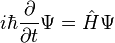 L'Equazione d'Onda
Il titolo dell'album, tra il serio e il faceto, rimanda alle grandi sintesi delle leggi universali offerte dalla fisica teorica dell'ultimo secolo. Con "teoria del tutto" si indica un ipotetico modello, la cui esistenza è ancora fonte di dibattiti, in grado di riunire i risultati della relatività generale con la fisica dei quanti. Non a caso il titolo è scritto usando i simboli di alcune delle più complesse equazioni fisiche, in particolare l'Equazione d'Onda di Schrödinger, riportata sopra
Il termine "Teoria del Tutto" venne utilizzato per la prima volta, in chiave ironica, in un fumetto di fantascienza degli Anni Sessanta. Altri rimandi fantascientifici nell'album riguardano il numero di segmenti incisi che sono esattamente 42, cioè "la risposta alla domanda fondamentale sulla vita, l'universo e tutto quanto" nella serie "Guida Galattica per Autostoppisti".
L'album è diviso in due CD. Il primo contiene le tracce fino a The Prediction, il secondo comincia con Fluctuations. I due CD sono ulteriormente divisi in quattro "Fasi":
CD 1, traccce 1-11: Phase I: Singularity (singolarità)
CD 1, tracce 12-22: Phase II: Symmetry (simmetria)
CD 2, tracce 1-9: Phase III: Entanglement (intrico)
CD 2, tracce 10-20: Phase IV: Unification (unificazione)
Interpreti
Ben Mathot - violino
Cristina Scabbia - The Mother, voce solista
Dave Kerzner - Keith Emerson, tastiere
Ed Warby - batteria
Erik Jordan - Rick Wackeman, tastiere
Janne "JB" Christoffersson - The Teacher, voce solista
Jeroen Goossens - bass flute, contrabass flute, flauto, transverse flute
John Wetton - The Psychiatrist, voce solista
Jordan Rudess - tastiere
Jos Driessen - batteria
Keith Emerson - tastiere
Maaike Peterse - violoncello
Maarten de Peijper - batteria
Marko Hietala - The Rival, voce solista
Michael Mills - Father, Irish bouzouki, voce solista
Rick Wakeman - pianoforte, sintetizzatore
Roger King - chitarra, Steve Hackett
Sara Squadrani - The Girl, voce solista
Steve Hackett - chitarra
Steve Rispin - The Psychiatrist, voce solista
Tommy Karevik - The Prodigy, voce solista
Troy Donockley - High Whistle, low whistle, uilleann pipes, whistle
Wilmer Waarbroek - cori
Comments
Leave your comment